Benefits of Smart-Outdoor Lighting Systems for your Home
Install smart outdoor lighting for your home, you’ll thank us later!

Home automation systems have been around for many years. However, the costs of these systems have substantially decreased as devices themselves have become smart-devices that are able to connect to the internet and be controlled with Apps on your phone. Such items as smart-thermostats, garage door openers and light switches have made this technology available to more consumers in recent years. As a result of this technology becoming readily available there has been an increase in energy savings, automated processes in your home that save you time and money, and enhanced security features.   Recently, smart-outdoor lighting has joined this trend and enabled homeowners to benefit from incorporating automation into their outdoor lighting systems.

Energy Savings

Smart-devices and more energy efficient technologies have allowed for homeowners to reduce energy usage resulting in a product that is better for the planet and your wallet.  LED lighting technology has helped reduce the energy usage up to 80% when compared to the standard incandescent light bulb.   An additional benefit of the LED technology is the lifespan versus that of the traditional light bulb. This reduces the time, effort and costs of changing light bulbs.

The home automation features of smart-outdoor lighting enable even more energy savings by allowing for customized settings so the lights are on only when you need them.  Many of these systems allow for turning lights on at sunset and automatically shifting accordingly throughout the year. These systems will also automatically shift for daylight savings time changes.  This saves time and money by turning the lights on at exactly the right time year-round.

Home Automation

If you already have a smart-home or business, have an Alexa, or use Siri you already know some of the benefits of home automation.  While each lighting system on the market is unique, they come with a wide range of features.  At a minimum, typically the systems will allow you to schedule the on and off times of the lights and control them manually.  The more advanced systems will allow you to choose from a wide variety of whites and colors right from the App.  Some of these systems will also enable you to schedule the brightness and color options based on holiday schedules year-round creating the ultimate lighting experience.

Control from Anywhere

Have you ever made it to the office and wondered if you might have left the lights on? Perhaps you have been on vacation in another city when you remembered to turn on the pathway lighting for your pet sitter? Unlike standard outdoor lighting systems, which require you to be home to control your lights, smart-lighting uses WIFI. Some systems even use smart phone apps to manage lighting preferences. This means you can turn lights on, adjust the brightness, and more all from your phone or tablet, whether you are sitting in your living room, a conference room, or a beach in the Caribbean.

Safety and Security

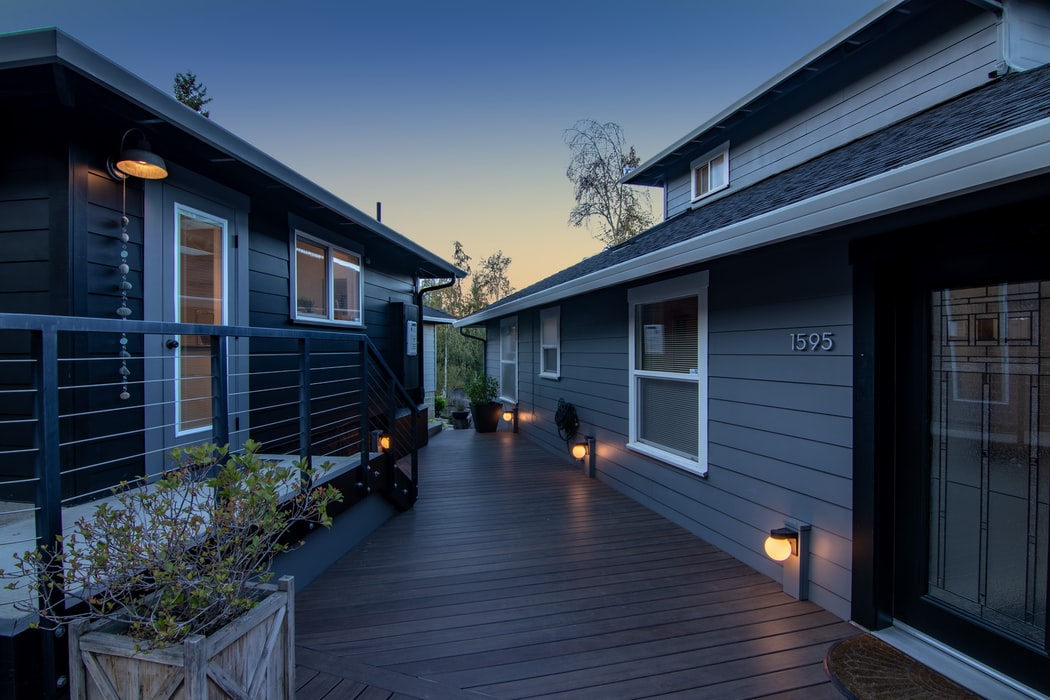
The safety of your home or business is always paramount. Whether you want to brighten pathways at your business or you are a homeowner that would like to illuminate the dark corners of your yard, smart-outdoor lighting systems can do the job. It is simple to schedule the lighting at your business to turn on at dusk, allowing patrons to safely access steps and sidewalks. With bright outdoor lighting, you can also deter trespassers and unwanted activity, no matter the time of day or night. Some smart lighting systems even offer motion sensor lighting as an added layer of security for your home or business.

Smart Outdoor Lighting is the Smart Choice

We are in the midst of the smart device revolution that enables users to be in full control of everything. From energy savings to fun for the holidays, with the most advanced systems on the market, you are in control from anywhere in the world!  With smart-outdoor lighting, the possibilities are endless!

Author Bio:

Chris McCoy is the founder of Haven Lighting. Haven Lighting is a leading manufacturer of smart Wi-Fi enabled landscape lighting systems, featuring unique LED products with unparalleled brightness, vivid color and white temperature adjustment.

3 Reasons You Should Add A Porcelain Patio to Your Garden

Choosing the right material for your patio can be difficult, especially with so many different and appealing options on the market. One patio material that’s gained popularity over the past few years is porcelain paving!

Unlike natural stone paving, which can be quite a challenge to maintain, porcelain paving boasts a number of qualities that make it ideal for use in family homes with a high foot-fall. Today we’re going to look at four reasons why you should add a porcelain patio to your garden.

1. Porcelain paving is strong and durable

Some people perceive porcelain to be a dainty, delicate material – which in some cases is true. Delicate vases, pottery and dinnerware can be made of porcelain, but its uses don’t end there. Unlike these fine homewares, porcelain paving is designed to be incredibly strong and durable, more so than natural stones. The secret behind its strength is vitrification! A process of intense heat and pressure that causes substrates to occur within the tiles. The resulting porcelain tiles are strong and perfect for use in busy family gardens.

2. Porcelain paving is slip-resistant

If you’re going to install a patio in a British garden, you need to know that your paving can cope when it’s exposed to water and rain. There are some paving materials on the market that are naturally quite porous, sedimentary stones for example. These tiles have a tendency to take on water and if the water absorbed by the tiles freezes, they can quickly become very slippery – not ideal if you’ve got elderly people, young children or pets running around. In order to prevent natural stones from taking on water and becoming slippery, you need to treat them with a suitable top-coat annually. This is a job that’s both time consuming and expensive! In comparison, porcelain paving is naturally non-permeable, meaning it’s perfect for British gardens where conditions can become slippery in a split second. Porcelain paving won’t take on water & won’t freeze, so you can rest assured that there’ll be no accidental slips on your patio. Better still, you won’t need to spend hours applying top-coats, so you’ll have more time to enjoy your new patio.

3. Porcelain paving comes in a range of styles

Creating your dream garden is easy when you choose porcelain paving. It comes in such a wide variety of styles, colours and textures that you’ll be spoilt for choice. If you want to create a natural stone look, you can achieve this without having to worry about the upkeep that’s usually associated with natural stone! We’ve seen high-quality porcelain paving that emulates real slate, limestone and quartz as well as range of other natural stones.

Alternatively, if you want to create a trendy, unique patio with a wood-effect, porcelain paving will allow you to create this look too. Porcelain paving really is a versatile paving option that will allow you to create a patio that fits your garden design perfectly. 

Is Grey Composite Decking a Good Choice for Contemporary Gardens?

Contemporary gardens are great spaces for entertaining guests and relaxing with friends. Nowadays, people are moving away from traditional gardens and are instead opting to turn their outdoor spaces into extensions of their modern homes.

One of the key features of contemporary gardens that we see time and time again, is a monochrome colour pallete. White, blacks and greys are often favoured over bright colours and loud patterns because they make a space look simple and clean. You can see in the photo above that grey decking can be contrasted with white accents and chrome accessories to give an ultra-modern finish.

Arguably, grey composite decking is one of the best choices if you want to make your garden look more contemporary. But why choose composite decking over other materials, you ask? Well, composite decking has some special features that make it perfect for low maintenance modern garden designs.

Low Maintenance

Once you’ve gone to the effort of bringing your contemporary garden to life, the last thing you want is to be faced with hours and hours of maintenance every year. First of all, you’re going to struggle to find timber decking that’s naturally grey in colour. If you do decide to go down the natural route, it’s almost certain that you’ll be faced with the task of painting the entire deck annually, just to keep it looking grey. Sounds tedious right? Unlike other types of traditional wood decking, high-quality composite decking will never need staining or sealing. In fact, it has a polymer sleeve that keeps it pristine for years after installation. Choosing a low maintenance material is important because patchy, worn or faded decking can instantly ruin the allure of your modern space. All that composite decking requires is a quick wash down with soapy water, so you can spend less time maintaining your deck and more time enjoying your delightfully, modern garden.

Slip Resistant

Nobody wants a garden that they can only use for a small fraction of the year. Choosing grey composite decking will help you make the most of your contemporary garden all year round. That polymer cap that we mentioned before, is designed to prevent water ingress. This drastically limits the chance of mould or ice forming across the surface. slip resistant material! So, whether a drink is spilt during a garden party, you’re caught out by the rain, or you want to make the most of your garden on a chilly autumn/winter night, there’ll be very little chance of a slip or fall.

Hopefully this blog will give you an insight into why grey composite decking is an excellent choice for contemporary gardens.

Introduction to Lawn Mower Spark Plugs

If you own a lawn mower, you likely know that you have spark plugs in the engine. These spark plugs need to be changed occasionally as routine maintenance!

However, if you find yourself asking what a spark plug actually is, don’t worry, you aren’t alone. A lot of people know very little about their vehicles. The good news is that, since you are reading this, you are seeking to learn more.

What Is a Spark Plug? What Does It Do?

As you may know, your engine moves the wheels by igniting fuel in cylinders. The pistons in these cylinders are moved by the burning fuel and turn a crankshaft. This rotational movement is transferred to your wheels to move the vehicle. To ignite the fuel, your engine needs a spark. Every time a piston goes through its cycle, the spark plug sets off a small electrical spark to light the fuel/air mixture and continue the process. Although small and humble, spark plugs are really important. Without them, your engine wouldn’t start, and you wouldn’t get anywhere.

Types of Spark Plugs

There are several types of spark plugs. These are primarily differentiated by the type of metal used in the electrode. There are copper/nickel, platinum, double platinum, iridium and double iridium spark plugs. When you want to buy new spark plugs for your lawn mower, you need to be careful to get the right type. The simplest way to check this is by looking in your vehicle’s owner’s manual. Your manufacturer included details on the spark plugs you need in there. Another option is to use a VIN lookup free tool at your favorite auto parts store. This will help you find the right spark plugs for your make and model.

Changing Spark Plugs

Although it may seem intimidating, changing spark plugs is a relatively easy process. You’ll be back to mowing your lawn in no-time! It is a great starting point for anyone who is interested in working on vehicles. All you need to do is disconnect the wire, remove the spark plug, gap your new spark plug, then install and connect the new one. The most complicated part of this process is gapping. Fortunately, this is also easy if you take the time to learn what you are doing. Gapping is changing the distance (or gap) between the two electrodes to match the voltage and amperage of the engine. You may wonder what happens when plugs aren’t gapped properly? It could damage your engine and cause misfires. With a feeler tool and a little patience, all you need to do is slowly adjust the electrode to be the same distance apart as those on your old spark plug. Again, with a little patience, this is hard to mess up. The feeler gauge does most of your work for you.

Get Started

Now that you know a little bit about spark plugs, you are ready to change them in your vehicle. This is a quick and easy process. Just head to your favorite auto parts store to find the right plugs and pick up some tools. You could be a DIY mechanic in no time.

Create Interesting Garden Designs Using Composite Decking

When you are faced with a blank canvas outside your home, the potential for garden greatness can be both exciting and overwhelming. A quick google search will show you hundreds of gardens that look like they’ve been created by professional landscapers!


So, the quest for a beautiful new garden, why not consider the different ways composite decking can be used to extend your living space and transform it? Composite decking is an incredibly beautiful, versatile, and low-maintenance option, so however you incorporate it into your garden design it will look great and require very little attention. This blog explores some of the different designs made available to you when you choose high quality composite decking.

Option 1: Colour Combination

Combining different shades of composite decking to create a unique deck design offers aesthetic and practical benefits. Composite decking looks and feels amazing while requiring very little maintenance, meaning you can get creative as you like with your deck design knowing that it will cause you no hassle in the future.

Different shades of composite decking can be combined to create an almost infinite array of designs. Use contrasting colours to create shapes in your decking or lay your different coloured boards successively to create an interesting striped effect– you can really get creative when you have more than one decking colour to work with.

One design that has become very popular is a picture frame design. This is where one decking shade makes up the majority of the deck and a second, complementary colour, is used around the perimeter to create a striking frame effect.

The beauty of choosing composite decking rather than traditional wooden decking to create any multi-coloured design, is that the boards will never need staining or sealing to keep them looking beautiful. If you made the same designs using timber decking, you would have to buy stains of different colours and apply them annually – maintenance that is both time consuming and costly.

Option 2: Mix Materials

While composite decking looks stunning on its own, it can also be combined with other materials to create an outdoor living area with textural depth. For a more traditional look, choose materials and colours that are closely related and complement one another. For a more contemporary look, choose noticeably different materials in contrasting colours.

One material that is often found in combination with composite decking is porcelain paving. High-quality, vitrified porcelain paving offers the combined aesthetic and practical benefits of two high-quality flooring materials. These materials work well together because neither requires much maintenance and both look great for years after installation.

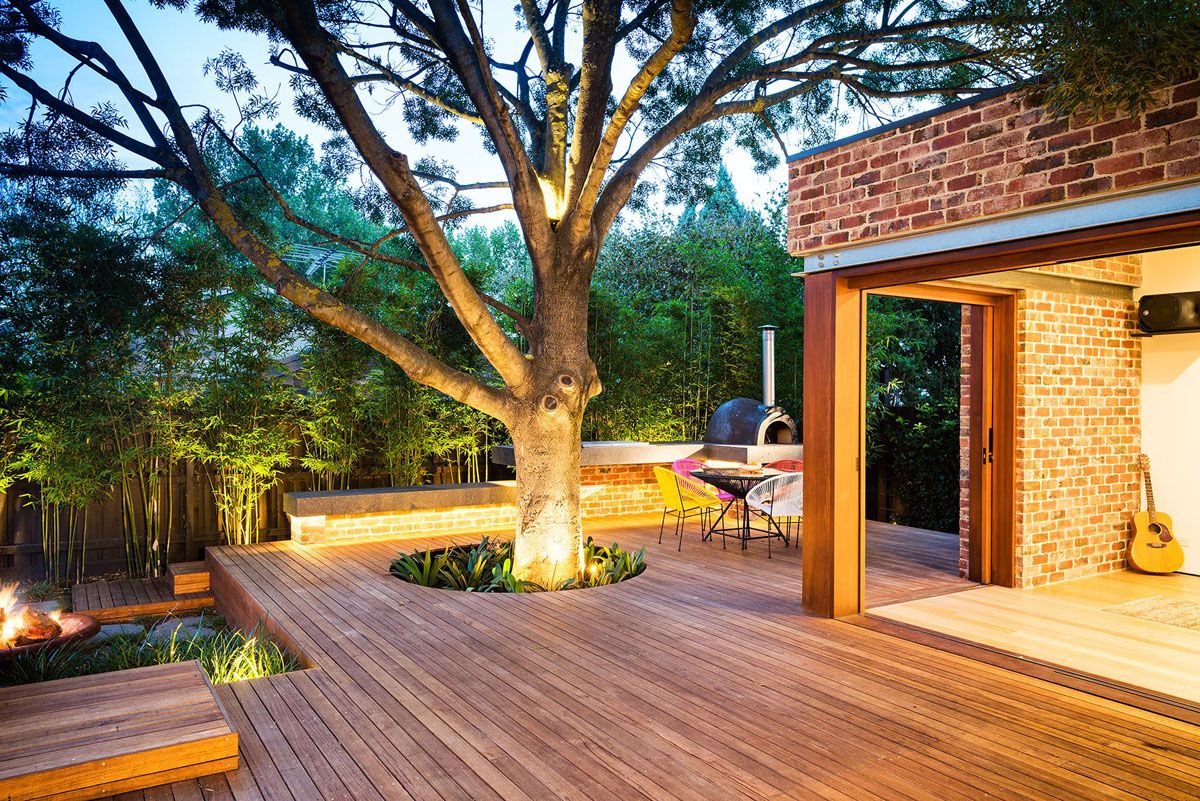
If you want to achieve a natural outdoor living space, composite decking can complement the existing features of your garden such as a lawn. Adding a deck around the perimeter of your lawn can make the space more usable. You can add outdoor seating or a barbeque to your decked area, and avoid running the risk of damaging the lawn or muddying your shoes.

Composite decking also offers a natural wood finish that cannot be achieved by plastic decking

Speak to an outdoor living expert if you are interested in implementing any of these designs into your garden space.