Top 3 Trends to Avoid in Rental Home Kitchen Design

To attract tenants and provide a functional and pleasant environment, the kitchen design of a rental home is quite essential!

However, kitchen design trends have changed, much like those in other design fields. While keeping up with the most recent design trends is vital, some are best avoided, especially in rental properties. Landlords may make sure that the kitchens in their rental properties stay classic, helpful, and universally appealing to various tenants by avoiding these trends.

These trends may be popular, but they frequently need long-term appeal and utility to fulfill the needs of diverse tenants. Bay Property Management Group Chester County can guide you on what most tenants prefer in a kitchen. Understanding these pitfalls allows landlords to make informed design decisions that increase the value of their rental properties while also providing a long-lasting kitchen space.

In this article, we’ll discuss the top three trends to avoid when planning or upgrading rental property kitchens.

Top 3 Trends to Avoid in Rental Home Kitchen Design

1. All-white Kitchen

If you want to entice prospective home buyers, an all-white color scheme in your kitchen is the best bet. However, present-day kitchen designers are more inclined to make more comfortable, cozier places and are quick to experiment with texture and color.

It’s time to move past the all-white kitchen fad, which has been around for a while. A white kitchen can look sleek and contemporary, but it can also be antiseptic and icy. Consider incorporating a few splashes of color or a distinctive texture into your kitchen decor rather than going all-white. Finding bolder options is easier if you select different colors besides all white.

Adding organic components like wooden hardware, vibrant tiles, raw wood finishes, or eye-catching lighting fixtures will help you do this. While the kitchen should have a straightforward design, you can experiment with color to enhance the room.

2. Open Shelving 

There are appropriate times and locations for open shelves; a few basic marble and steel slabs can look beautiful. However, replacing your cabinetry with open shelving is a trend that will soon become antiquated.

Open shelves are also dust magnets, which makes it challenging to keep everything tidy. Having curious children or animals inside the house could also make it dangerous. The safer option is to keep them hidden away in beautiful kitchen cabinets.

3. Pattern Backsplash

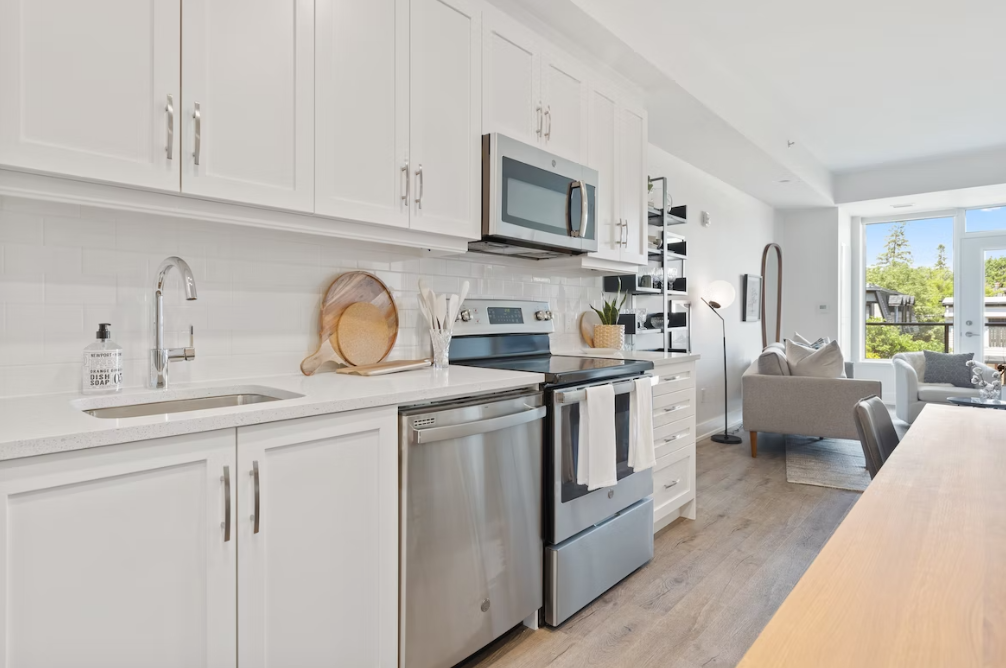
Even though a backsplash can give your kitchen a dash of vibrancy or texture, a pattern backsplash can be too much. Backsplashes with elaborate patterns or intense colors might make your kitchen appear antiquated and crowded. Instead, use a straightforward, time-honored backsplash design. A subway tile backsplash is a reliable and fashionable solution for any kitchen design.

Why Kitchen Upgrades are Expensive

1. Materials and equipment

The price of kitchen remodeling can increase significantly by using premium materials and appliances. For instance, custom cabinets, expensive worktops like granite or quartz, luxurious flooring alternatives, and the finest equipment are frequently more costly.

2. Labor charges

Hiring qualified specialists to undertake the installation and renovation job, such as carpenters, plumbers, electricians, and contractors, can be costly. Concerning the project size, their rates may become expensive due to their qualifications and expertise

3. Structure-related changes

If you want to extend your kitchen, remove walls, move electrical or plumbing lines, or do any other structural work, you frequently need professional help and permission. These changes necessitate more creation, materials, and even engineering concerns, which might raise costs.

4. Intricacy and customization

The price of kitchen upgrades may increase due to complicated designs and customized features. Customizations that involve additional resources, effort, and artistry, such as one-of-a-kind design components, delicate tiling work, specialized lighting systems, or specially crafted cabinetry, are more costly.

5. Unknown problems

Unforeseen problems, such as water damage, mold, or obsolete electrical wiring, may appear throughout the renovation. Since you must fix these issues before the upgrades can get finished, resolving them can raise the total expense.

6. Restrictions and permits

There may be requirements to apply for permits and abide by local building standards and regulations for kitchen upgrades. The costs may increase due to permit fees and following these rules.

7. Electricity and plumbing work

Plumbing and electrical system relocations or upgrades can be expensive, especially if you have to reroute pipes, install new cables, or upgrade the main electrical panel to make room for more appliances or lighting fixtures.

Final Thoughts 

It’s vital to avoid antiquated kitchen trends as time goes on because they may make your room appear worn-out and uninviting. If you want a contemporary and ageless kitchen, avoid using design features like exposed shelving and dark cabinets.

You can build a stunning and helpful place that will withstand the test of time by heeding everything we’ve discussed in this article, and you can keep your house feeling new and welcoming for decades to come.

Additionally, if you want to revamp your kitchen or give it a substantial makeover, it will cost you a hefty amount. You can spend from $500 to several thousand dollars on kitchen remodeling. There’s nothing like upgrading your kitchen if you possess the resources.

Breathe New Life into Your Home in Queens with These 5 Renovation Projects

The new year is right around the corner, so why not take on some renovation projects to make your home in Queens, NY more stylish?

Photos By: Stock Images

With the new year being right around the corner, why not make your home feel like new by tackling some home renovation projects this winter? Here are some of the best ways you can breathe new life into your home in Queens, NY without breaking the bank.

Kitchen Cabinet Rehab

The kitchen is probably one of the most used rooms in any house, and it can start to look worn out and, well, kind of meh. Putting on a fresh coat of paint is the easiest way to make your kitchen look new and up-to-date.

White, different shades of blue (we love navy blue!), dark browns, and different shades of grey are all popular paint colors. But if you love color, don’t be afraid to try bolder colors like bright orange, turquoise, or even neon greens or yellows.

Oh, and don’t forget to replace the hardware as well. It’s often the small things that make a big difference.

Revitalizing the Flooring

You should refinish your hardwood floors if you have them. You’d be surprised at how different your home will feel when the scratches and scuffs are gone and the floor shines. But if you’re on a budget, vinyl flooring is an excellent option!

We like mid-tone browns to warm up a room and give it a cozy, rustic look. If you want a modern look, dark chocolate browns or even light grays are beautiful choices.

New Paint

Over time, walls will get nicks, be colored on, get marks on them, and even get holes here and there. These things can make a room look messy and not very inviting. You can change that by fixing any holes and filling in any dents or other flaws with spackle. Once the spackle has dried and been smoothed, it’s time to get out the ladder and paint. Choose a paint color that goes with the rest of the room, but don’t be afraid to try out different colors. This is your home, so you can make it as colorful or as plain as you want.

If you want to sell your house soon in queens, choose neutral colors so that more people will be interested in it. Not everyone will like a dark green living room or a wall that is bright pink.

New Window Treatments

Window treatments are often overlooked when we make other house improvements. We may change the curtains every once in a while, but you can do so much more! If you want your home to look more expensive, you may do things like removing the cheap white blinds and replacing them with wooden ones.

Finish the Basement

This might be a big project that takes a while, but trust us… Your family will have more room to unwind and spend quality time together thanks to the additional space provided by a completed basement, which not only provides important living space to your home. Whether they plan to stay for an extended period of time or simply drop by sometimes, your elderly parents will appreciate the seclusion afforded by an apartment in the basement.

As a homeowner, you should do what you can to make your house feel like a home. Even though spring cleaning is important, it’s also important to update parts of your home that are starting to look old and boring. These ideas for home improvements are just the beginning. If you look around your house, you may be surprised by how many projects you can find.

6 Dramatic and Bold Interior Design Ideas for all Budgets

For many homeowners, impressing those that step foot in their home can be just as important as creating a space that they themselves are happy with!

Photos By: Unsplash

While we don’t all have the same taste, homemakers often agonize over the right bold color or distinct design that they feel will excite others as much as it does them. If your own house is in desperate need of that extra aesthetic spark, there’s a wider range of possibilities out there than a trip to the paint shop — and they don’t all have to break the bank either. We’ve narrowed down six elegant and timeless additions to your home that will lend it a huge dose of personality, charm and sophistication — some with the extra benefit of functionality too.

High budget features

Home lifts

Aside from offering enhanced accessibility for those with mobility issues in your home, installing a domestic lift is a fantastic way to future-proof a property, adding convenience, comfort, and class. As Premier Lift Group explain: “People who may not necessarily need a home lift, but want one for their potentially jaw-dropping aesthetic value will treasure it, with bespoke lifts in particular [providing] a striking focal point that gives one luxury home an edge over another.”

Before going ahead with the installation though, you should seek out a consultation with an architect and lift designer in order to keep abreast of the different factors at play. For instance, who will be using the lift the most? How many people will use it in total? Bear in mind that a bespoke lift can be adapted into the structure of your home, but how this is done depends on the scale, frequency of use, and safety regulations.

Oversized chandeliers

Adding an oversized chandelier, either in a modern build or an older property, blends tradition with elegance and creativity. There may, in fact, be no bolder statement for a home that exists today. As Lindye Gallaway points out, it’s a great way to draw attention to something while still making it transitional and beautiful for your aesthetic.

The living room is the most common location for a chandelier, but, if placed in the reception or entry area, it can create a feeling of opulence as soon as you enter the property. If the hallway width is not accommodating enough, or you’d rather put up the chandelier in a more open space, the living room is just the ticket  — just make sure that it doesn’t obstruct the view of any art or prints on the walls, or your TV.

Medium budget features

Large contemporary canvas art

Forget that reproduction of Monet or Picasso — if you have a more mid-range budget, you can’t go wrong with a striking contemporary art canvas to really tie the space together and give your home a modern feel.

Make sure that the surrounding area looks polished and uncluttered though, so you can emphasize its dramatic features without distraction. Having a few smaller artworks instead may be less costly and imposing, but these can look disorganized on an expansive wall space. Save them for other parts of your house instead, and opt for a large canvas.

For framing and mounting, a considered choice can provide some extra panache and presence. For the canvas in particular, many prefer a tray or floater frame. As Soho Frames point out, these can be made from a “variety of solid woods such as oak, walnut, maple, tulip, beech, ash, pine, wenge”. Though these are more expensive than plain wood, they will certainly be more reliable — not to mention sleek and elegant.

Floor to ceiling bookcase

Nothing screams sophistication and culture like an aesthetically pleasing bookshelf. Whether you’ve got an addiction to buying books or a large wall you just don’t know what to do with, floor to ceiling bookshelves are more functional than they might seem. Their classic wood feel highlights both the top and bottom of the space it sits in, but can also be used to display antiques and any other unique items you have.

As The Spruce suggests: “This kind of shelving is also perfect for home offices when you want to have an additional storage area near and or above your desk — and can even work as additional dining room or kitchen storage”.

Low budget features

Bold colors for walls and ceiling

A bright, deep, or intense shade for your walls can instantly transform the look of the entire room. While many opt for more traditional, neutral shades such as beige, grey or cream, if you want to make a statement, go big.

Taking blue as our example, dark or classic hues balance out the more earthy wood tones or house plants you may have. On the more pronounced side, turquoise is underrated due to its highly distinctive tone, but it’s actually more malleable than you might expect — as MyMove maintains, this shade “can be soft and subdued, rich and bold or bright and playful”.

Just remember to paint the ceiling as well — this is a common aspect that people neglect. In fact, you could even use a different color, whether lighter or darker, for heightened contrast.

Dramatic lighting

A striking shade is all very well, but if it’s not accentuated and complemented with thoughtful lighting, you may as well have left it as is. For walls that are dark, lights are instrumental for the room’s total decor. These fixtures will be more pronounced when placed on dark walls, so being a bit picky about the style is essential.

For instance, you could invite a mood from the bygone roaring twenties by installing art deco orbs, which pair well with floor lamps. You want to choose lights with as much personality as possible — to quote My Domaine, “bold or sculptural pendant lighting fixtures often feels more like art than a utilitarian necessity”. It just goes to show how you can start to refine your interior design from the smaller details, giving your home flair for years to come.

Need New Lights but not Sure what to Go For? Here are Some Tips on How to Choose the Best Ceiling Lights for your Room

Choose the best ceiling lights for your room with these tips!

When renovating a residential room, you could too easily treat its lighting as an afterthought. However, a room’s lighting actually plays a major part in its atmosphere and practicality.

The ceiling lighting should be a particular priority. Growing Family notes that ceiling lighting “is the main source of artificial light, and as such it forms the base upon which you can build up layers of accent and task lighting with things like floor lamps, wall lights and desk lamps.”

For which room are new lights needed?

Obviously, different rooms have different purposes. Hence, what exactly you are supposed to do in a room will be a driving factor behind what ceiling lights would most suit it.

A bathroom, for example, will need ceiling lights that are designed to cope with moisture, while some rooms might have art pieces that you would like lighting to highlight. You should therefore carefully assess your needs for a given room before buying any ceiling lights for it. 

How large is the room?

It might seem like an obvious question to ask yourself, but it does bear emphasis. After all, if you fail to sufficiently account for the proportions of the room, you could end up with lighting that, on the ceiling, looks comically small or feels as though it is drowning you in light. 

If the ceiling is particularly low, you could buy yourself a set of flush mount ceiling lights — as these, once installed, will nestle up against the ceiling rather than hang down into the room.

Do you want to make a style statement?

“My advice is to go as big as you dare,” interior designer Emma Sims Hilditch advises Homes & Gardens readers seeking to light bedrooms. “Large lamps make a statement and glass options are good, as they don’t look too bulky.” 

Of course, only you can be certain exactly what kind of style statement you are eager to make, if any. So, you could peruse the wide range of Pagazzi lighting solutions pictured online as you seek just the right ceiling lighting to satisfy your aesthetic preferences.

How strong does the illumination need to be?

You could be surprised by just how much punch is packed by chandeliers with their light output. No wonder they work so well in larger rooms! However, even in smaller ones, it can be crucial to consider just how bright you need lighting to be.

In kitchens and home offices, recessed ceiling lights can prove wonderfully useful, as they can provide strong, even light ideal for when you are busy cooking or working.

Does the room have any specific parts that you need to keep especially visible?

Obviously, a kitchen can have certain areas — like a worktop and the sink area — that could fall into this category, and there might be some wall art to which you would like to draw attention.

In situations like these, track lighting — so-called as it comprises numerous lights mounted onto a straight track that is itself fitted flush to the ceiling — can help.

Why Industrial Furniture is In-Trend Right now and how to Style it

With wide open spaces and rustic charm having its moment in the sun in the world of interior design, it’s not surprising that industrial furniture has seen a steady rise in popularity in recent years!

Photos By: Stock Images

From open brick walls to metallic accenting, this unique and raw form of styling has once again found itself in the spotlight, especially for those looking to keep up with the latest fads and fashions dominating the home design sphere.

There is a lot to embrace when taking a more industrial approach to designing your living space, and getting the absolute most out of the materials used to emphasise your artfully curated home interior. Industrial furniture is famous for its intricate attention to detail, unique finished-unfinished veneer, and the usage of robust and reusable resources that often go into achieving the overall desired look.

If you’re looking to build a home that is bursting with simultaneous character and simplicity, coupled with a strong sense of cost-effective durability, read on as we cover the best ways to style industrial furniture in your home for an optimal outcome.

How To Style It

Highlight with Light Accessorising 

Learning how to gently highlight and accessorise cohesively is key when it comes to getting down the fundamentals of this iconic aesthetic. Whether it’s by investing in box section table legs or vintage bronze wall lights, there is so much fun to be had mixing and matching the most famous staples of this style, until you find the minimalist balance that feels right for you. Understanding which colours work with which, and how to implement metallic under toning can also go a long way in this regard.

Focus on Minimalism

The charm of industrial design largely comes from the contrast between sleek modernity and an older, more rustic vibe collaborating within the same space, which is why a big part of achieving the look comes from letting the statement furniture and silhouetting speak for itself. No need to overcomplicate it by utilising a lot of wall clutter or maximalist accenting to crowd up the space – it’s okay to let the room breathe.

Utilise Renewable Resources

One of the most recognisable characteristics of industrial styling is its affinity for using renewable and recyclable resources. Look for utilitarian materials of strong, high quality from brands that prioritise taking an eco-friendlier approach, in order to really live the industrial lifestyle. This point has been exemplified in just about every corner of this unique aesthetic, from the inclusion of reclaimed brick to the consistent usage of steel and iron. 

Integrate Neutral Colours

Generally consisting of muted, gentle tones and unique texturing, industrial design really shines through its unique use of colour and print. No need to brighten up the space with primary or pastel palettes, as that look is not super compatible with the more conventionally understated staples of industrial furniture. It is better to go for more toned-down hues that work well with the natural lighting of the room in question, above all else.

And there you have it – everything you need to know about why industrial furniture is so ‘in’ right now, what an industrial design scheme consists of, and how to style industrial pieces within your home.